Think Tank - PMC
Professional & Social Dialogues (The Forum)
Professional & Social Dialogues is the Think Tank - PMC platform for structured, non-partisan exchange on topical issues. It hosts issue-led roundtables, protects open contribution under the Chatham House Rule, and turns discussion into synthesis briefs and follow-up knowledge products. Medical Dialogues is one of its active constituent chapters.
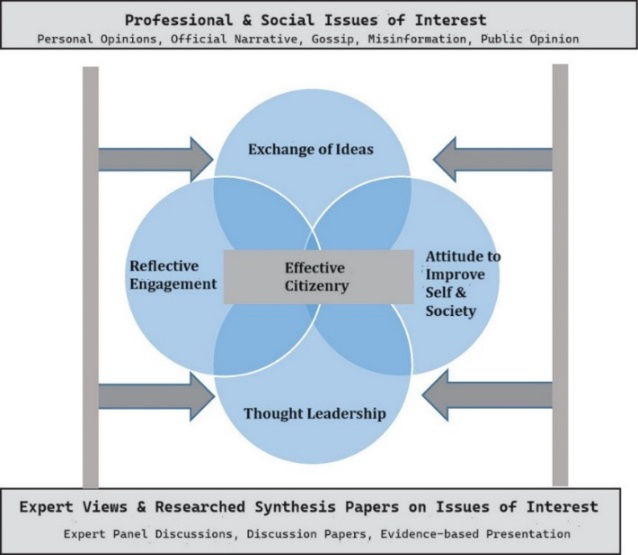
The Forum
Dialogue for Civic, Professional, and Social Value
The Forum is built as a serious but accessible space for discussing issues that matter to professionals, citizens, and institutions. Its design is not just conversational; it is deliberately structured so that insight can be documented, tested, and refined into useful synthesis.
The November 2024 Medical Dialogues roundtable shows the intended model clearly: clarify the topic, open the floor equitably, capture the strongest ideas, and preserve room for fellowship without diluting the seriousness of the discussion.
- A non-partisan platform for interested stakeholders to co-create and co-produce synthesis briefs on topical issues.
- Roundtable sessions are designed so participants have an equal opportunity to contribute and reflect.
- Outputs can be curated into briefs and submissions for professional, civic, and public institutions where relevant.
- The Forum combines exchange of ideas with networking, fellowship, dining, and social connection.
Objectives
Forum Objectives
- Host topical professional and social dialogues through structured roundtable and town hall formats.
- Prepare citizens' discussion papers and synthesis briefs for professional, civic, and government engagement.
- Bring together younger, contemporary, and senior citizens for informed exchange and reflection.
- Create space for networking, friendship, and thoughtful social fellowship around serious issues.
Programme Experience
How the Forum Feels in Practice
Conceptual Framework
The Forum is designed to move from issue framing and structured exchange to synthesis, documentation, and follow-up.

Opening and Framing
Each session starts by defining the topic, clarifying the task, and aligning participants on the intended outcome.
Exchange of Ideas
Participants contribute through timed interventions, clarifications, and open discussion designed to sharpen thinking rather than perform speeches.

Hosting and Fellowship
The Forum treats hospitality as part of the experience: exchange, dine, wine, and fraternize in a dignified setting.
Archive Spotlight
Medical Dialogues Roundtable 23 November 2024
Session Snapshot
- Topic
- The implications for respect for patient's autonomy in medical ethics: perspectives and reflections on medical mandates.
- Date
- Saturday, 23 November 2024
- Time
- Start at 13:30 hrs
- Venue
- FASE Plaza, Silverest, Chongwe
- Format
- Closed roundtable discussion with equal opportunity to contribute
- Participation
- Registration required; archived session
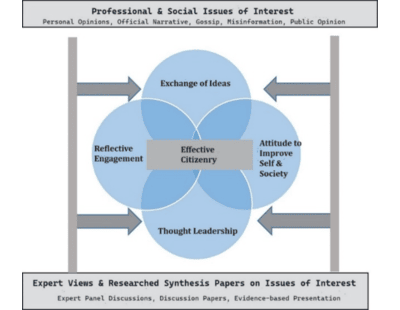
Roundtable Participants
The synthesis brief records a multi-disciplinary discussion anchored by medical, ethical, and public-interest perspectives.
- Hon. Dr. Chris Kalila (MP)
- Dr. Chrispin Moyo
- Dr. Shailen Desai
- Dr. George Mutambo
- Dr. Francis Mupeta
- Prof. Sekelani S. Banda
House Rules
The Forum's Six-Step Method
Definition of Terms
The house begins by clarifying the key terms and concepts used in the topic so discussion starts from shared meaning.
Task and Goals
Participants agree the purpose of the discussion and the expected deliverable or outcome before deeper exposition begins.
Exposition - Phase 1
Participants make their first round of structured contributions while the house encourages active participation and captures key points.
Exposition - Phase 2
A second round of presentations extends the discussion, tests assumptions, and surfaces competing perspectives.
Conclusions
The house summarizes the main arguments, tensions, and areas of emerging consensus from the discussion.
Synthesis and Follow-Up
Key ideas are documented into a synthesis paper or brief and shared as the basis for follow-up and wider engagement.
Synthesis Brief
Key Reflections from the Medical Dialogues Brief
Respect for patient autonomy was affirmed as a core medical ethics principle, especially for competent adults making informed decisions, including refusal of treatment.
The discussion emphasized that autonomy must be considered alongside beneficence, non-maleficence, and justice whenever mandates are proposed in the name of public health.
Participants cautioned that some medical mandates may carry political, commercial, or copycat motivations, so credibility depends on rigorous and objective evidence.
The Forum concluded that any threshold for overriding patient autonomy must be exceptionally high, evidence-based, and free from non-scientific motivations.
Conclusion from the archived session
The roundtable concluded that respect for patient autonomy is not absolute, but any decision to waive it in the public interest must meet a very high threshold supported by credible objective evidence.
Event Gallery
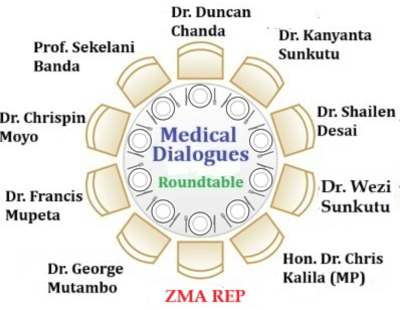
November Roundtable Visual Archive



Resource Library
Documents and Archive Materials
November Roundtable Flyer
Event flyer for the 23 November 2024 Medical Dialogues roundtable, including topic, date, venue, and session framing.
Open documentHouse Rules
The six-step discussion method for the Forum, including use of the Chatham House Rule and collaborative roundtable structure.
Open documentMedical Dialogues Synthesis Brief
Summary of definitions, purpose, discussion points, and the concluding position reached during the roundtable.
Open documentPicture Collage
A visual collage from the November roundtable session and its hosted fellowship moments.
Open documentJoin The Forum
Join the Next Dialogue
Professional & Social Dialogues remains open to members who want rigorous exchange, responsible civic reflection, and purposeful fellowship. To join, email info@faseltd.co.zm or faseltd@gmail.com, or send a WhatsApp message to +260 967 207 421.